
Upcoming activities:
23rd SCAC: Fourth Industrial Revolution and Future Society (26-28, Oct'24)
Recent activities
On-Spot Project Review (BAS-USDA 6th Phase)- Jun'24
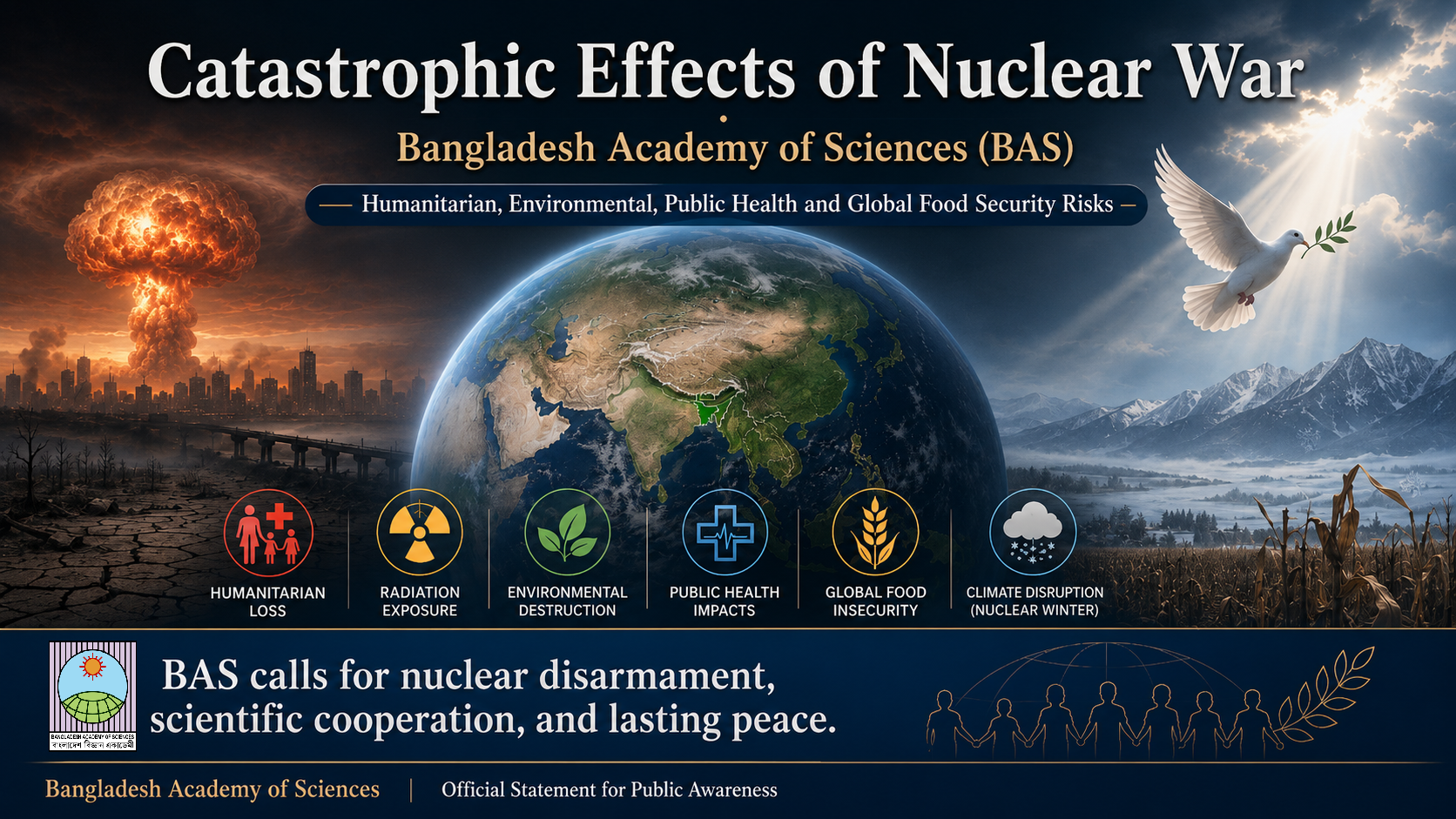
BAS_Statement on the Catastrophic Effects of Nuclear War
------------------------------------------------------------------------------------------------------------------------------------------------------------------------------------
The Bangladesh Academy of Sciences (BAS) expresses profound concern over the catastrophic humanitarian, environmental, public health, economic, and global security consequences associated with nuclear weapons and nuclear warfare. Historical experience from Hiroshima and Nagasaki, together with contemporary scientific evidence, demonstrates that the use of modern nuclear weapons could result in massive immediate loss of life, widespread radiation exposure, long-term health impacts, environmental devastation, and severe disruption of social and economic systems.
The risks extend far beyond the directly affected areas. Scientific studies indicate that a large-scale nuclear exchange could significantly alter the global climate, trigger a “nuclear winter,” disrupt agricultural production, and create severe global food insecurity. Even a limited regional nuclear conflict could have consequences crossing national borders and potentially place hundreds of millions of people at risk through both direct and indirect effects.
BAS recognizes the importance of international efforts to prevent nuclear proliferation and advance disarmament, including the Treaty on the Non-Proliferation of Nuclear Weapons (NPT), the Treaty on the Prohibition of Nuclear Weapons (TPNW), the Comprehensive Nuclear-Test-Ban Treaty (CTBT), and related arms-control initiatives. Bangladesh has consistently supported nuclear non-proliferation, disarmament, and the peaceful use of nuclear energy and remains committed to these international frameworks.
In view of the continuing global nuclear threat, BAS calls for the immediate prohibition and complete elimination of nuclear weapons, fulfillment of disarmament obligations by nuclear-weapon States, continued international advocacy for the implementation of the TPNW, and stronger scientific research on the humanitarian, climatic, environmental, radiological, public health, agricultural, economic, and societal consequences of nuclear conflict.
The Bangladesh Academy of Sciences firmly believes that scientific knowledge, international cooperation, effective multilateral action, and sustained global commitment are essential to preventing nuclear conflict and achieving a world free from nuclear weapons. BAS therefore reaffirms its support for national and international initiatives that advance nuclear disarmament, reduce nuclear risks, and promote lasting peace, security, sustainable development, and the protection of present and future generations.
